December 5, 2025
12 Fresh Office Interior Designing Ideas for 2025
Transform your workspace with these 12 actionable office interior designing ideas for 2025. Explore concepts for productivity, wellness, and brand identity.
The traditional office is evolving. Today's workspaces are more than just places to work; they are dynamic environments designed to foster collaboration, boost productivity, and support employee well-being. The days of one-size-fits-all cubicle farms are gone, replaced by a demand for spaces that are as flexible and innovative as the teams that inhabit them. A well-designed office is a strategic asset that can attract top talent, reinforce company culture, and directly impact the bottom line. This requires a thoughtful approach to layout, lighting, acoustics, and technology.
This comprehensive guide moves beyond generic advice to provide a practical roundup of 12 distinct office interior designing ideas. We will cover everything from Biophilic designs that integrate nature to Neurodiversity-Friendly layouts that accommodate different sensory needs. You'll find actionable insights for various settings, whether you're outfitting a compact home office, a bustling creative agency, or a large corporate campus. For those looking to visualize these concepts in their own space, we’ll also touch on how tools like AiRoom can generate multiple design mockups from a simple photo, streamlining the creative process. This list is your blueprint for creating a workspace that is not only functional but truly inspiring.
1. The Collaborative Hub: Mastering the Open Office Layout
An open office layout eliminates physical barriers like walls and private offices, creating a unified, shared workspace. This design, championed by tech giants like Google and Spotify, is engineered to boost transparency, spontaneous collaboration, and a strong sense of community. By removing physical divisions, teams can communicate more freely, which accelerates problem-solving and innovation. This approach is one of the most dynamic office interior designing ideas for companies prioritizing a flat hierarchy and agile teamwork.
How to Implement It Successfully
The key to a successful open layout is balancing collaboration with the need for concentration. Without careful planning, these spaces can become noisy and distracting.
- Create Quiet Zones: Designate specific areas, like "library zones" or small nooks with comfortable seating, where quiet is the rule.
- Integrate Phone Booths: Install soundproof pods for private calls or focused solo work sessions. This provides an essential escape from the communal buzz.
- Use Acoustic Materials: Incorporate sound-absorbing panels, high-backed sofas, acoustic lighting fixtures, and carpeting to dampen ambient noise.
Pro Tip: Establish clear workplace etiquette. Simple guidelines, like using headphones for music or taking lengthy conversations to designated meeting areas, can dramatically improve the environment for everyone.
This layout is ideal for fast-paced, creative, and collaborative teams where constant interaction is a core part of the workflow. Proper furniture placement is crucial to define different functional areas within the open space. For guidance on creating effective layouts, you can find helpful strategies in our guide to furniture arrangement tips.
2. Activity-Based Working (ABW): The Dynamic Workspace
Activity-Based Working (ABW) is a dynamic office strategy where employees choose from a variety of settings based on the task at hand, rather than being assigned a permanent desk. Popularized by forward-thinking companies like Microsoft and Philips, this model empowers staff to select the best environment for their needs, whether it's a quiet pod for deep focus, a lounge area for informal chats, or a collaborative zone for team brainstorming. This flexible approach is one of the most transformative office interior designing ideas for organizations aiming to boost productivity, autonomy, and employee satisfaction.
How to Implement It Successfully
A successful ABW model requires a thoughtful mix of technology, infrastructure, and culture. The goal is to provide a seamless experience as employees move between different work modes throughout their day.
- Design Diverse Work Zones: Create a rich variety of spaces, including library-style quiet areas, open collaboration tables, private phone booths, and comfortable social lounges.
- Invest in Technology: Implement a user-friendly desk and room booking system. Ensure robust Wi-Fi coverage and provide accessible power outlets in all zones.
- Provide Personal Storage: Offer secure lockers where employees can store personal belongings, making it easy for them to move freely without being tied to one spot.
Pro Tip: Manage the transition carefully. Introduce ABW in phases and provide clear communication and training to help employees adapt to a new way of working. This ensures the cultural shift is as smooth as the physical one.
This layout is ideal for companies with diverse roles and a mobile workforce. It optimizes real estate usage by eliminating underutilized desks and creates an environment built on trust and empowerment.
3. Biophilic Office Design: Connecting with Nature Indoors
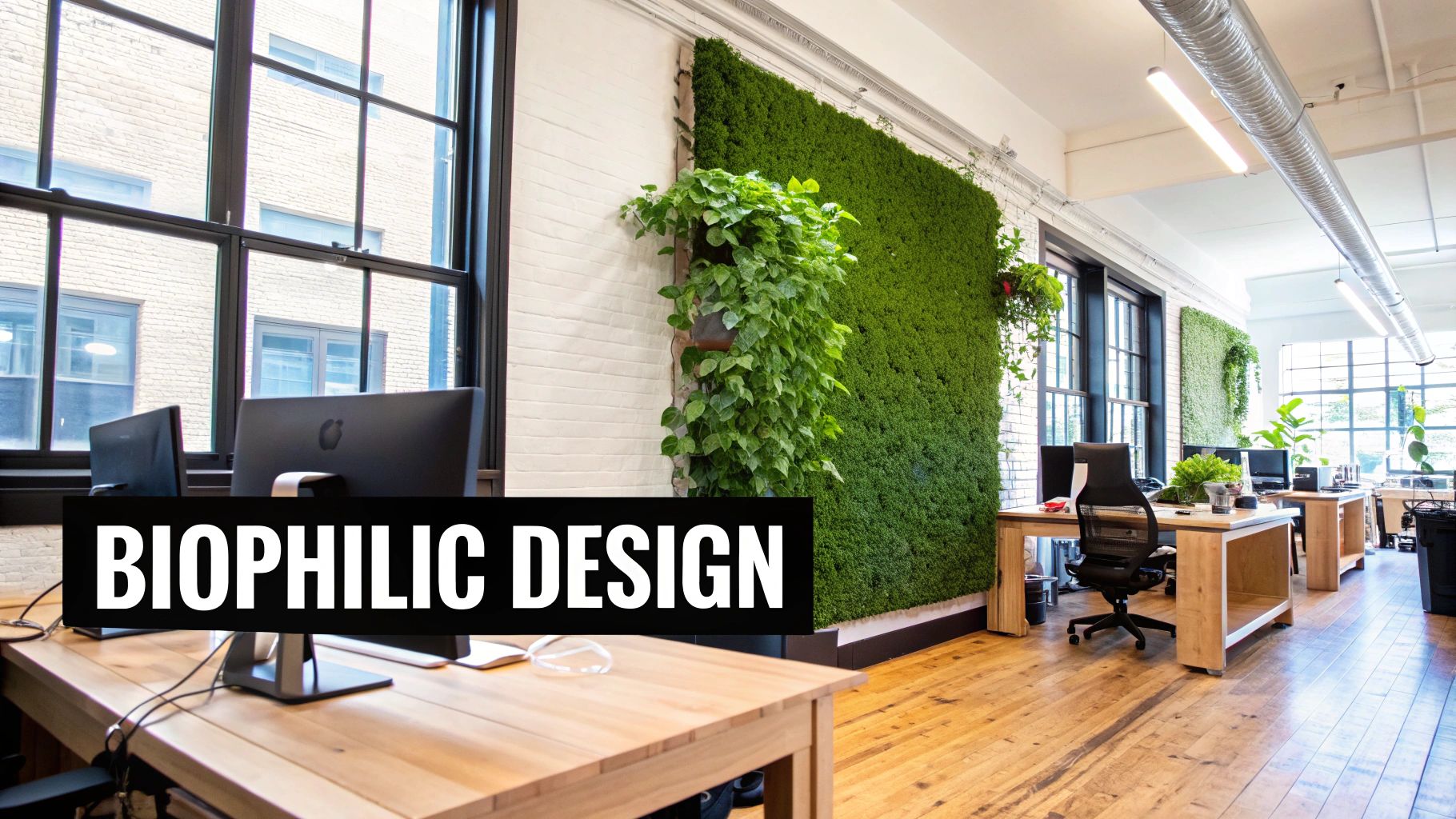
Biophilic design is a philosophy centered on our innate human need to connect with nature. It involves integrating natural elements like plants, water, natural light, and organic materials into the built environment. Pioneered by companies like Interface Inc., this approach goes beyond simple decoration. It aims to create a restorative and engaging space that reduces stress, enhances creativity, and improves overall well-being. This is one of the most impactful office interior designing ideas for fostering a healthy and productive workforce.
How to Implement It Successfully
Effective biophilic design harmonizes natural elements with functional workspace needs. The goal is to create subtle yet constant connections to the natural world without overwhelming the office environment.
- Maximize Natural Light: Position desks near windows and use glass partitions instead of solid walls to allow sunlight to penetrate deeper into the office.
- Integrate Living Greenery: Introduce low-maintenance plants like snake plants and pothos, or create a statement "living wall" in a common area.
- Use Natural Materials: Incorporate elements like wood, stone, bamboo, and cork in furniture, flooring, and wall coverings to add organic texture.
Pro Tip: Don't forget other senses. The sound of a small water feature or the use of natural, non-toxic materials can create a more immersive and calming biophilic experience.
This design is ideal for any company looking to prioritize employee wellness and sustainability. It's particularly effective in urban settings where access to nature is limited, offering a refreshing escape and a powerful boost to mental clarity.
4. Remote-First Office Design
A remote-first office design reimagines the physical workspace as a destination for collaboration and connection, not just daily tasks. This approach, championed by companies like Slack and Salesforce, acknowledges that focused work can happen anywhere. The office, therefore, becomes a central hub optimized for activities that benefit most from in-person interaction, such as team-building, brainstorming sessions, and client meetings. This is one of the most relevant office interior designing ideas for organizations embracing flexible and hybrid work models.
How to Implement It Successfully
The goal is to make the office an intentional, high-value destination. This means prioritizing quality over quantity of space and focusing on the employee experience when they do come in.
- Design for Collaboration: Make flexible, tech-enabled meeting spaces the primary feature, not rows of desks.
- Implement Desk Booking: Use a "hot desking" or hoteling system where employees can reserve a workspace online when needed.
- Add Personal Lockers: Provide secure storage for personal items, giving hybrid workers a convenient "home base" without needing a permanent desk.
Pro Tip: Invest heavily in high-quality video conferencing technology in every meeting room. This ensures a seamless and equitable experience for both in-person and remote participants, which is the cornerstone of a successful hybrid model.
This layout is ideal for companies with a significant portion of their workforce operating remotely. It reduces real estate costs while boosting employee satisfaction by offering a purpose-built space for connection and teamwork.
5. Minimalist Office Design: The Power of Simplicity
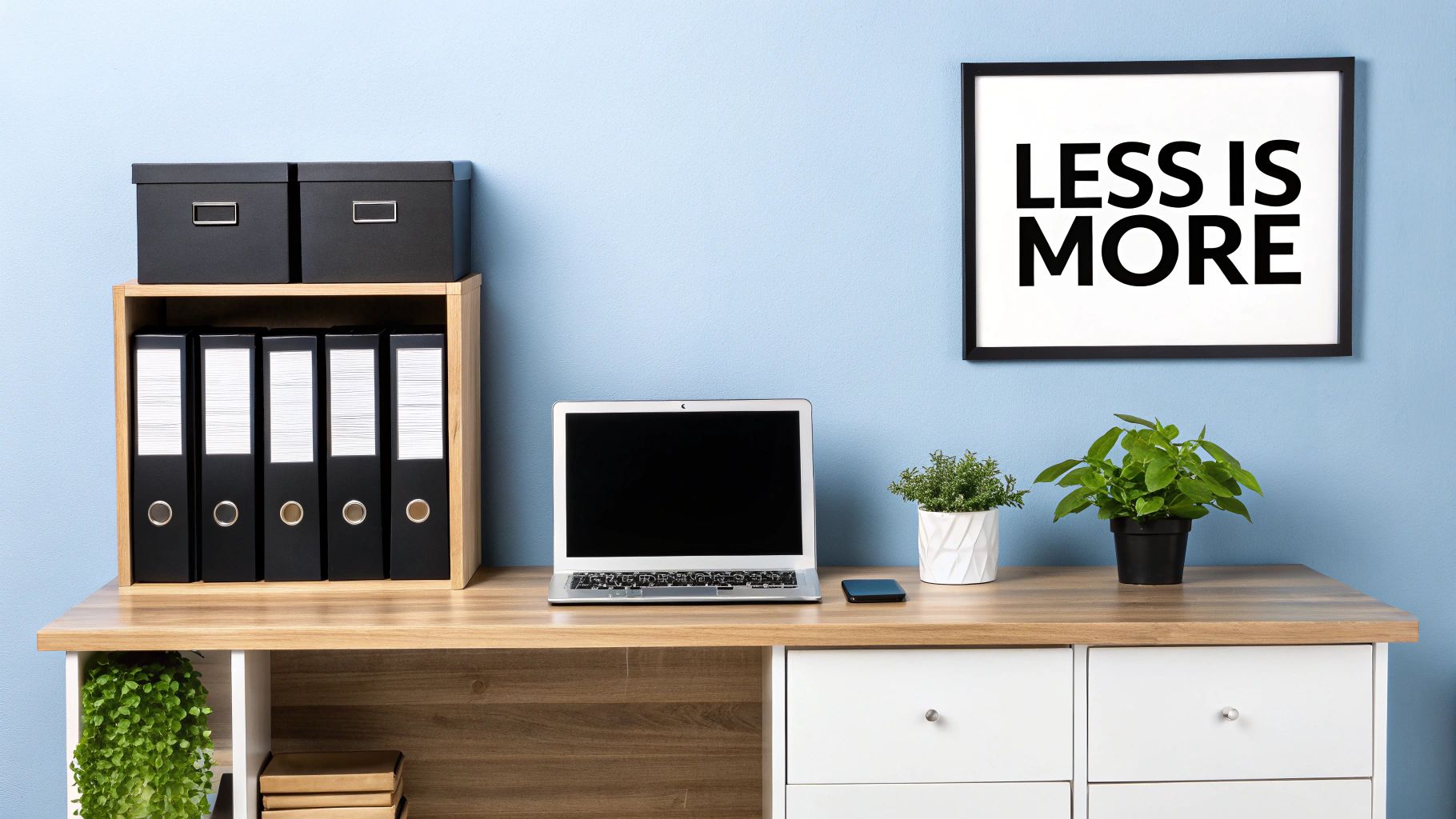
Minimalist office design is a philosophy centered on simplicity, functionality, and the intentional removal of non-essential elements. Rooted in Japanese and Scandinavian design principles, this approach creates clean, uncluttered spaces that reduce visual stress, minimize distractions, and promote clarity and deep focus. By emphasizing “less is more,” this is one of the most effective office interior designing ideas for organizations that value order, precision, and a calm working environment.
How to Implement It Successfully
A successful minimalist office is more than just an empty room; it's a strategically designed space where every item serves a purpose. The goal is to achieve a serene atmosphere without appearing cold or sterile.
- Adopt a Neutral Palette: Use a base of whites, grays, and beiges to create a calm backdrop. Introduce subtle warmth with natural wood tones.
- Choose Multifunctional Furniture: Select pieces that offer both style and utility, such as desks with integrated storage or modular shelving systems.
- Implement Smart Storage: Hide clutter with streamlined, built-in cabinetry and concealed storage solutions to maintain clean lines and open floor space.
Pro Tip: Focus on quality over quantity. A few high-quality, well-designed pieces of furniture and minimal, impactful artwork will make a stronger statement than numerous cheaper items.
This design is ideal for any workspace aiming to enhance employee focus and reduce cognitive load. The clean aesthetic projects an image of efficiency and sophistication. To explore similar core philosophies, check out these fundamental design concepts in interior design.
6. Industrial Office Design
Industrial office design embraces raw, structural elements, transforming former warehouses and factories into edgy, functional workspaces. This aesthetic celebrates exposed brick, visible ductwork, polished concrete floors, and metal accents, creating an environment that feels both historic and modern. Championed by creative agencies and tech startups, particularly in urban lofts, this style highlights a building's authentic character. This approach is one of the most distinctive office interior designing ideas for companies wanting a raw, authentic, and inspiring atmosphere.
How to Implement It Successfully
The challenge of industrial design is to prevent the space from feeling cold or unfinished. Balancing raw textures with refined, comfortable elements is crucial for creating a welcoming and productive environment.
- Soften with Textiles: Introduce plush rugs, comfortable upholstered sofas, and soft cushions to contrast with the hard surfaces like concrete and metal.
- Warm Up with Lighting: Use warm-toned lighting, such as Edison bulbs or modern pendant lights with a warm glow, to counteract the coolness of industrial materials.
- Add Biophilic Touches: Incorporate large potted plants and greenery to bring life and a natural softness to the space, breaking up the harsh lines.
Pro Tip: Use art and bold graphics to inject personality and color. A large-scale mural or vibrant abstract painting can serve as a stunning focal point against a raw brick or concrete wall.
This design is perfect for businesses that value authenticity, creativity, and a connection to urban heritage. It fosters an open, dynamic feel that encourages innovation and a no-frills, function-first work culture.
7. Wellness-Focused Office Design
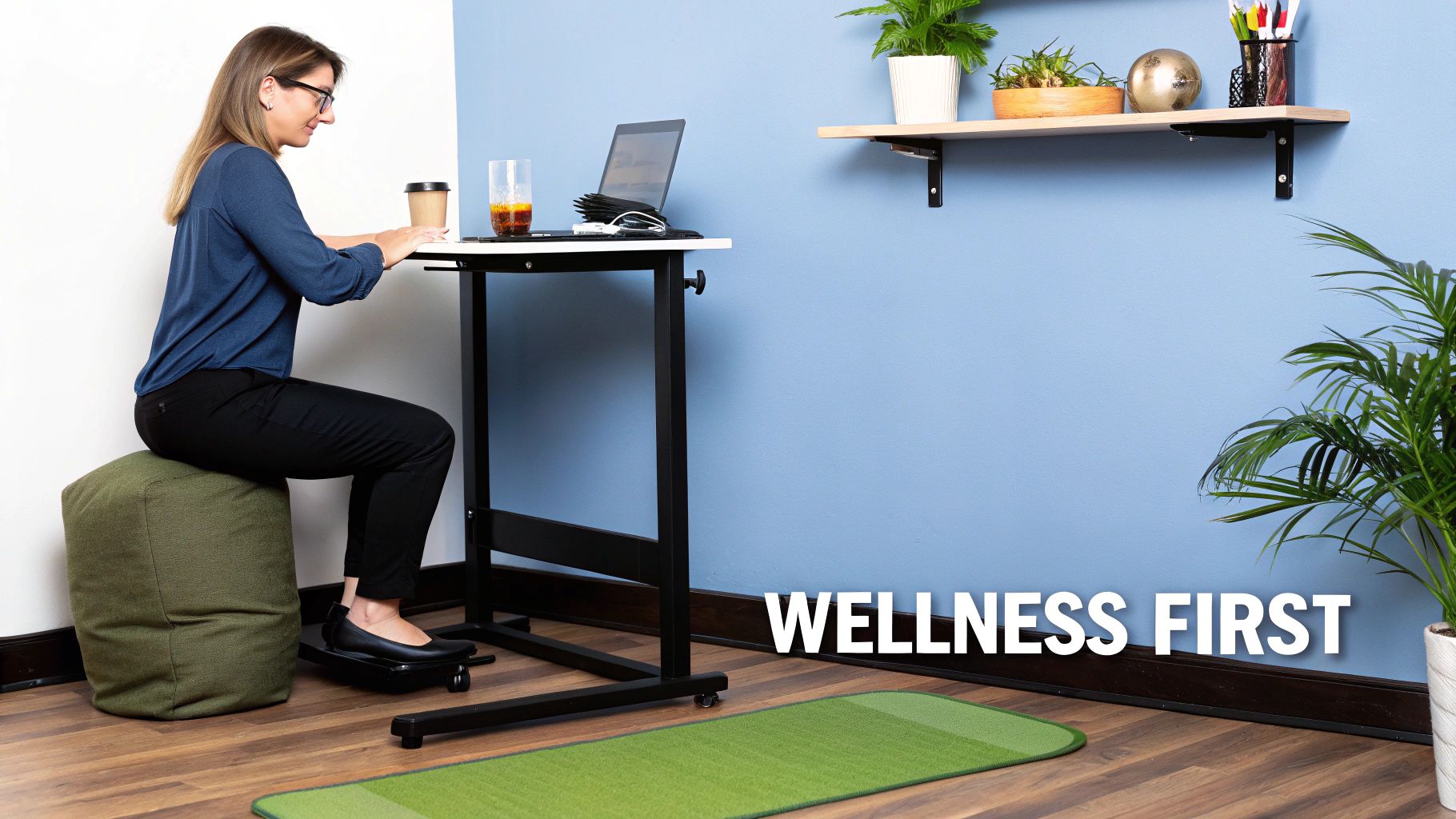
Wellness-focused office design is a holistic approach that prioritizes the physical, mental, and emotional health of employees. This philosophy goes beyond basic comfort, integrating elements that actively support well-being, from air quality to mental quietude. Companies like Google and Salesforce champion this model, recognizing that a healthy workforce is more productive, engaged, and loyal. This is one of the most human-centric office interior designing ideas for organizations looking to build a supportive and sustainable company culture.
How to Implement It Successfully
The goal is to create an environment where healthy choices are easy and accessible. This means looking at the office as a complete ecosystem that influences daily habits and mental states.
- Prioritize Ergonomics: Invest in fully adjustable chairs, sit-stand desks, and monitor arms to prevent physical strain and encourage movement throughout the day.
- Create Restorative Spaces: Designate a tech-free quiet room for meditation, reflection, or simply a moment of peace. Use soft lighting, comfortable seating, and calming decor.
- Promote Healthy Habits: Stock kitchens with nutritious snacks and beverages, and consider adding a small fitness area or partnering with local gyms.
Pro Tip: Incorporate wellness into the office's daily rhythm. Organize optional midday stretch breaks, offer on-site yoga classes, or create designated walking paths around the office to encourage movement and mental resets.
This design approach is ideal for any company that wants to reduce employee burnout, improve retention, and boost overall morale. It demonstrates a clear investment in the people who drive the business, fostering a positive and health-conscious work environment.
8. Modular and Flexible Office Design
A modular and flexible office design utilizes movable partitions, adaptable furniture, and reconfigurable spaces to support evolving business needs. Championed by innovative furniture companies like Herman Miller and Steelcase, this approach allows a single area to transform from a collaborative workshop to individual focus stations without costly renovations. It’s an agile solution for dynamic companies that need their physical environment to adapt as quickly as their projects and teams do. This is one of the most practical office interior designing ideas for future-proofing a workspace.
How to Implement It Successfully
The goal is to create a "plug-and-play" environment that is both functional and cohesive. Success hinges on investing in the right systems and planning for change.
- Choose High-Quality Systems: Opt for durable, easy-to-assemble modular furniture and partitions that can withstand frequent reconfiguration.
- Integrate Modular Technology: Use mobile power towers, wireless charging stations, and movable whiteboards to ensure technology access is as flexible as the layout.
- Plan for Sound Management: Select movable partitions with good acoustic properties to create private, focused spaces when needed.
Pro Tip: Develop a "playbook" with several pre-designed layout options for different activities like team sprints, client presentations, or focused work days. This empowers teams to quickly and safely reconfigure the space themselves.
This design is ideal for businesses with fluctuating team sizes, project-based work, or those leasing office space who want to avoid permanent construction. A consistent color and material palette across all modular elements is key to maintaining a professional and unified aesthetic, no matter the configuration.
9. Neurodiversity-Friendly Office Design
A neurodiversity-friendly office design creates an inclusive environment that accommodates the diverse sensory and cognitive needs of all employees, including those with autism, ADHD, and dyslexia. This approach moves beyond a one-size-fits-all model, recognizing that different people thrive in different settings. Pioneered by companies like Microsoft and SAP, this is one of the most thoughtful office interior designing ideas because it prioritizes well-being and productivity for every individual, unlocking the full potential of a diverse workforce.
How to Implement It Successfully
The goal is to provide variety, control, and choice over one's immediate environment. This reduces sensory overload and anxiety while boosting focus and comfort for neurodivergent employees.
- Offer Sensory Variety: Create a mix of spaces, from quiet, low-lit focus pods to more active, collaborative zones. This allows employees to choose an environment that suits their task and sensory needs.
- Implement Adjustable Lighting: Install dimmer controls and task lighting so individuals can adjust the brightness and color temperature of their workspace. Avoid fluorescent lights, which can cause sensory strain.
- Use Calming Color Palettes: Opt for muted, natural color schemes with soft textures. Avoid loud patterns or overly bright, high-contrast colors that can be visually overwhelming.
Pro Tip: Simple additions like providing noise-canceling headphones and offering flexible seating arrangements can make a significant impact. Conduct anonymous surveys to understand specific employee needs before making changes.
This design philosophy is essential for any modern company committed to diversity and inclusion. It ensures that the physical workspace is a tool for success, not a barrier, for every member of the team.
10. Branded Office Design: Weaving Your Company's DNA into the Workspace
Branded office design transforms your physical space into a living embodiment of your company's identity, culture, and values. This approach goes beyond simply adding a logo to the lobby; it uses color, materials, custom graphics, and spatial flow to tell your brand’s story. Companies like Nike, with its athletic-inspired interiors, and Disney, with its storytelling motifs, use this method to create an immersive experience that reinforces brand values for both employees and visitors. This is one of the most powerful office interior designing ideas for building a strong, cohesive company culture.
How to Implement It Successfully
The goal is to create an authentic environment that reflects your brand's core personality without feeling like a marketing billboard. A well-executed branded space should feel inspiring and genuine.
- Incorporate Brand Colors Strategically: Use your primary brand colors for accent walls, furniture, or architectural details, balanced with a neutral palette to avoid overwhelming the space.
- Showcase Company History: Create a "history wall" with key milestones, vintage photos, or early product prototypes to connect employees to the company's journey.
- Translate Values into Visuals: If a core value is "sustainability," use reclaimed wood and recycled materials. If it's "innovation," integrate cutting-edge technology and modern design elements.
Pro Tip: Create an "Instagrammable" moment, a visually striking feature wall or installation that naturally encourages social sharing. This can be a neon sign with your company motto or a unique art piece that represents your brand.
This design is perfect for companies with a strong consumer-facing brand or a distinct internal culture they wish to cultivate. Developing a clear vision is the first step, and a mood board can be an invaluable tool. For inspiration, explore our guide on creating an effective interior design mood board.
11. Green and Sustainable Office Design
A sustainable office design prioritizes environmental responsibility by integrating eco-friendly materials, energy-efficient systems, and waste reduction strategies. Pioneered by companies like Interface and Google, this approach minimizes the building's carbon footprint while fostering a healthier and more productive workspace. By focusing on sustainability, businesses can align their physical environment with their corporate values, appealing to eco-conscious talent and clients. This is one of the most forward-thinking office interior designing ideas for organizations committed to long-term environmental stewardship.
How to Implement It Successfully
The goal is to create a space that is both environmentally friendly and conducive to well-being. This requires a holistic approach that considers the entire lifecycle of materials and resources.
- Choose Sustainable Materials: Opt for recycled, reclaimed, or rapidly renewable materials like bamboo flooring, cork, and carpets made from recycled fibers. Look for products with environmental certifications.
- Prioritize Energy Efficiency: Install smart LED lighting, maximize natural light with large windows, and use energy-efficient HVAC systems. Consider on-site renewable energy sources like solar panels.
- Enhance Air and Water Quality: Incorporate natural ventilation, use low-VOC paints and finishes, and install water-saving fixtures in restrooms and kitchens.
Pro Tip: Start small by implementing a comprehensive recycling and composting program. Clearly labeled bins and educational signage can significantly reduce office waste and encourage employee participation.
This design is ideal for any company looking to reduce its environmental impact, improve employee health, and strengthen its brand reputation. It demonstrates a powerful commitment to corporate social responsibility that resonates both internally and externally.
12. Agile Office Design
Agile office design is a dynamic approach that physically supports agile work methodologies, prioritizing flexibility, rapid collaboration, and adaptability. Inspired by the workflows of software development teams at companies like Atlassian and Spotify, this layout is configured for iterative problem-solving, daily stand-ups, and quick project pivots. It breaks down departmental silos and organizes space around project teams or "squads," making it one of the most effective office interior designing ideas for fast-moving, innovative companies.
How to Implement It Successfully
The goal is to create an environment where teams can reconfigure their space on demand to suit the task at hand, whether it's a design sprint or a daily scrum meeting.
- Embrace Mobility: Use lightweight, mobile furniture like rolling whiteboards, modular desks on casters, and stackable seating. This allows teams to quickly create new layouts.
- Visualize Progress: Install large writable surfaces, digital displays, and dedicated walls for project boards (like Kanban or Scrum boards) to keep goals and progress highly visible.
- Designate Stand-Up Zones: Create open, designated areas with enough space for teams to conduct their daily stand-up meetings comfortably without disrupting others.
Pro Tip: Balance high-energy collaboration zones with easily accessible quiet areas. Agile work involves deep-focus tasks as much as group work, so providing quiet pods or library-style zones is essential for productivity.
This design is perfect for tech companies, design agencies, and any organization using sprint-based workflows. It fosters a culture of transparency and shared ownership by making the work process visible and interactive for the entire team.
12 Office Interior Design Ideas Compared
| Design | Implementation complexity 🔄 | Resource requirements ⚡ | Expected outcomes 📊⭐ | Ideal use cases 💡 | Key advantages ⭐ | Key drawbacks |
|---|---|---|---|---|---|---|
| Open Office Layout | Medium 🔄 — layout changes, acoustics mitigation | Low–Medium ⚡ — furniture, acoustic treatments | 📊 Better collaboration & space use; ⭐ lower privacy | Collaborative teams, startups, dense offices 💡 | ⭐ Encourages interaction; cost-efficient space use | Higher noise; low privacy; concentration challenges |
| Activity-Based Working (ABW) | High 🔄 — zoning, bookings, cultural shift | High ⚡ — tech for booking, lockers, varied furniture | 📊 Flexible space use; ⭐ supports varied tasks | Dynamic, hybrid organizations; consultancies 💡 | ⭐ Adapts to task needs; space-efficient | Requires strong IT & culture change; perceived loss of ownership |
| Biophilic Office Design | Medium–High 🔄 — integration with structure, maintenance | Medium–High ⚡ — plants, daylighting, materials | 📊 Improved well‑being & productivity; ⭐ health benefits | Knowledge work, offices valuing wellness 💡 | ⭐ Reduces stress; boosts focus & air quality | Higher upfront & maintenance costs; allergy considerations |
| Remote-First Office Design | Medium 🔄 — reimagining purpose, tech setup | Medium ⚡ — conferencing tech, booking systems | 📊 Lower occupancy costs; ⭐ improved work-life balance | Distributed teams, companies with hybrid policies 💡 | ⭐ Reduces real estate costs; attracts remote talent | Less spontaneous collaboration; cultural & onboarding challenges |
| Minimalist Office Design | Low–Medium 🔄 — decluttering, concise design rules | Low–Medium ⚡ — quality furnishings, storage | 📊 Cleaner visual environment; ⭐ improved focus | Professional services; minimal-brand firms 💡 | ⭐ Low maintenance; timeless aesthetic | Can feel sterile; limited creative stimulation |
| Industrial Office Design | Medium 🔄 — expose and finish existing structure | Low–Medium ⚡ — raw materials, lighting, acoustics | 📊 Distinctive workplace identity; ⭐ trendy appeal | Creative agencies, startups in loft spaces 💡 | ⭐ Character‑rich; cost-effective reuse | Can feel cold; acoustic & thermal control issues |
| Wellness-Focused Office Design | High 🔄 — facilities, programs, metrics | High ⚡ — ergonomic furniture, fitness spaces | 📊 Reduced burnout & absenteeism; ⭐ better retention | Large employers prioritizing employee health 💡 | ⭐ Improves productivity & retention | High initial & ongoing costs; unequal usage risk |
| Modular & Flexible Office Design | Medium 🔄 — modular systems, reconfiguration plans | Medium–High ⚡ — movable walls, modular furniture | 📊 Rapid adaptability; ⭐ future‑proofing | Growing companies needing scalability 💡 | ⭐ Low renovation cost long-term; flexible layouts | Sound isolation limits; initial system cost |
| Neurodiversity-Friendly Office Design | Medium–High 🔄 — customization, training | Medium ⚡ — adjustable lighting, quiet rooms | 📊 Inclusive productivity gains; ⭐ broader talent pool | Organizations hiring neurodiverse talent 💡 | ⭐ Improves inclusion; benefits all with quiet zones | Requires tailored solutions & ongoing training |
| Branded Office Design | Medium 🔄 — custom elements, storytelling | Medium–High ⚡ — custom art, signage, fit-out | 📊 Strong employer brand & visitor impression; ⭐ cultural alignment | Consumer brands, design-led firms 💡 | ⭐ Reinforces identity; aids recruitment | Costly custom work; may limit future flexibility |
| Green & Sustainable Office Design | High 🔄 — certifications, systems integration | High ⚡ — certified materials, energy systems | 📊 Lower long-term operating costs; ⭐ environmental impact | Organizations with CSR goals & long-term horizons 💡 | ⭐ Energy & health benefits; tax incentives | Higher upfront cost; longer timelines & expertise needed |
| Agile Office Design | Medium 🔄 — team zones, visual project tools | Medium ⚡ — writable surfaces, mobile furniture | 📊 Faster iteration & team cohesion; ⭐ better collaboration | Software teams, product squads, agencies 💡 | ⭐ Supports sprints & rapid decisions | Needs cultural alignment; potential noise and privacy loss |
Your Blueprint for a Better Workspace
We've explored a wide spectrum of office interior designing ideas, from the collaborative energy of Activity-Based Working and Agile layouts to the focused tranquility of Biophilic and Wellness-Focused designs. Each concept, whether it's the raw authenticity of Industrial style or the brand-centric storytelling of a Branded Office, offers a unique set of tools to solve modern workplace challenges. The central theme connecting all these approaches is a fundamental shift away from a one-size-fits-all mentality.
The most effective office is no longer just a place to house desks; it's a dynamic ecosystem engineered to support specific goals. It's an environment that must be as flexible as the teams who use it, as inclusive as the talent you wish to attract, and as inspiring as the work you aim to produce.
Key Takeaways for Your Design Journey
As you move from inspiration to implementation, remember these core principles:
- Function Over Form (But Aim for Both): The best designs emerge when you prioritize your team's actual workflow. Do they need quiet zones for deep work, or dynamic areas for spontaneous collaboration? Answering this question first ensures your aesthetic choices serve a practical purpose.
- Flexibility is the Future: The rise of remote and hybrid models demands adaptability. Integrating modular furniture, movable partitions, and multi-purpose zones ensures your office can evolve alongside your business needs, making it a sustainable long-term investment.
- Well-being Drives Performance: A workspace that actively promotes physical and mental health is non-negotiable. Elements like ergonomic furniture, natural light, acoustic control, and biophilic touches are not luxury add-ons; they are essential components for a productive, engaged, and happy workforce.
- Inclusivity by Design: Creating a space that accommodates neurodiversity and different work styles is a powerful statement. It shows your team that their individual needs are seen and valued, fostering a stronger, more loyal company culture.
Your Actionable Next Steps
Translating these ideas into a tangible plan can feel daunting, but it starts with a clear vision. Begin by auditing your current space and gathering feedback from your team. What are the friction points? What is working well? Use their insights to create a moodboard that combines elements from the various styles we've discussed. You might find that the perfect solution for your company is a hybrid approach, blending the sustainable principles of Green Design with the flexibility of a Remote-First layout.
The ultimate goal of mastering these office interior designing ideas is to create more than just a beautiful room. It's about building a strategic asset for your business. A thoughtfully designed office can improve retention, boost creativity, enhance collaboration, and become a physical manifestation of your company's values and mission. It's your blueprint for building not just a better workspace, but a better way of working.
Ready to stop guessing and start visualizing? Bring your unique office interior designing ideas to life with AiRoom. Upload a photo of your current office, select your preferred styles, and let our powerful AI generate stunning, photorealistic concepts in seconds, helping you create the perfect blueprint for your team.